Why does no one want to see Lando Norris win the F1 title? Uncovering the complex fan sentiment
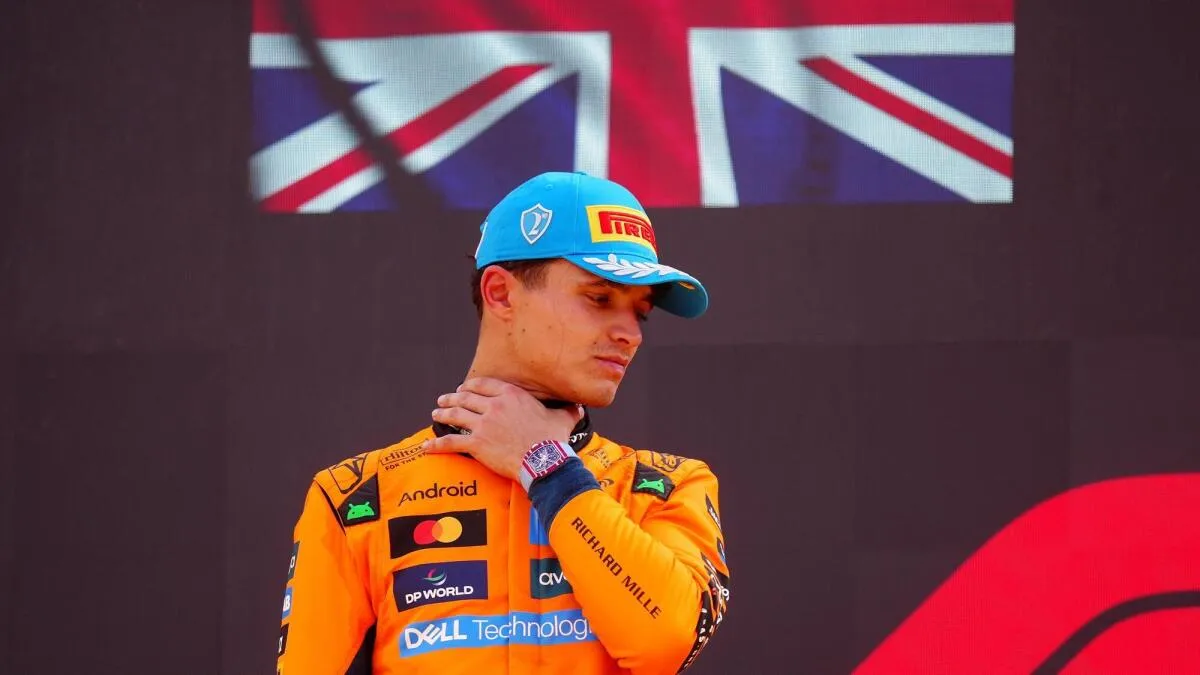
The roar of the crowd at a Formula 1 podium ceremony tells a story beyond the race results. When Lando Norris stepped onto the Brazilian Grand Prix podium in 2025, the boos from the crowd echoed nearly as loudly as the cheers. This moment crystallized a growing sentiment in the F1 world: despite his prodigious talent, charismatic personality, and genuine passion for the sport, Norris has become an unlikely figure of controversy. The British driver represents a paradox in modern Formula 1—simultaneously one of the most popular personalities off-track, yet increasingly vilified on it.
This contradiction raises important questions about modern fandom, championship narratives, and what fans truly want from their sporting heroes. While Norris has cultivated a massive following through his streaming, humor, and accessibility, a vocal segment of the Formula 1 community has grown resistant to the idea of him lifting the championship trophy. The reasons are multifaceted, ranging from team dynamics to perceived inconsistency, and reflect broader shifts in how audiences engage with the sport.
Why does nobody want to see Lando Norris win the F1 title? The McLaren controversy factor
The transformation of McLaren from plucky underdog to dominant force created an unexpected backlash against their star driver. When the team struggled in the midfield, Norris was celebrated as a qualifying specialist extracting maximum performance from limited machinery. However, as McLaren developed the fastest car on the grid in 2024 and 2025, expectations shifted dramatically. Fans who once sympathized with Norris’s winless streak now scrutinized every missed opportunity with intense criticism.
McLaren’s infamous “Papaya Rules” became a lightning rod for controversy and significantly damaged Norris’s public image. The team’s attempt to manage their drivers fairly through complex team orders struck fans as manipulative and artificial. Every race seemed to bring a new radio message about letting a teammate pass or holding position, creating the perception that Norris’s results were engineered rather than earned. This stood in stark contrast to the pure competition fans crave at motorsport’s highest level.
The situation reached a boiling point during the Austrian and British Grands Prix in 2025. While Norris secured back-to-back victories, both wins carried asterisks in the public imagination. In Austria, teammate Oscar Piastri’s aggressive challenge forced team intervention, while at Silverstone, Piastri’s time penalty handed Norris victory on a technicality. These circumstances reinforced the narrative that Norris couldn’t win cleanly or convincingly, even when driving the fastest car.
The booing at circuits like Mexico City and São Paulo reflected deeper frustrations. Fans chanting Max Verstappen’s signature song during the British national anthem revealed the tribal nature of modern F1 fandom. Norris had become collateral damage in a larger conflict between fan bases, with his success perceived as threatening the established order that many fans had grown comfortable with.
Why does nobody want to see Lando Norris win the F1 title? The inconsistency narrative
Throughout his career, Norris has battled the reputation of being brilliant but inconsistent. Critics point to weekends where his qualifying brilliance doesn’t translate to race day mastery, or sessions where he mysteriously drops pace. This perception—fair or not—has created doubt about his championship credentials among fans who value relentless perfection.
The numbers tell a complicated story. While Norris has shown flashes of dominance, his career statistics reveal fewer wins than many champions at similar points in their careers. Fans and pundits have noted that for every dominant weekend like Mexico 2025, where he topped every session, there have been races where he failed to maximize the car’s potential. This inconsistency becomes magnified when compared to champions like Lewis Hamilton or Max Verstappen, who maintained top-level performance across entire seasons.
Team radio communications have sometimes painted Norris in an unflattering light. Moments of frustration, strategic confusion, or apparent indecision have been broadcast worldwide, creating a perception of mental fragility under pressure. While these moments are normal for any driver, they’ve been amplified in Norris’s case, partly due to his own candid nature and McLaren’s transparent approach to media.
The comparison with Verstappen has been particularly damaging to Norris’s championship credibility. When Verstappen won 19 races in 2023, many acknowledged his car advantage but still celebrated the achievement. When Norris struggles to convert McLaren’s pace into consistent victories, fans question whether he deserves the title. As GP Blog noted in their analysis, “What Verstappen did in 2023 was exceptional… Does that make the achievement less impressive? No.” The double standard reveals how narratives around drivers become entrenched.
Why does nobody want to see Lando Norris win the F1 title? The polarization of modern fandom
Formula 1 has transformed from a sport enjoyed by general motorsport enthusiasts into a battleground of tribal fan bases. This shift, accelerated by Netflix’s Drive to Survive and social media, has created camps around specific drivers and teams. Norris, caught in the crossfire between Verstappen supporters and traditional F1 purists, has struggled to build the unified backing that previous champions enjoyed.
Social media platforms have amplified every misstep and controversy. Reddit discussions about Norris often devolve into polarized arguments, with supporters praising his authenticity and detractors labeling him immature. One Reddit user captured this divide: “Lando is as dumb as a box of rocks. Has said some really stupid and almost spiteful shit about and to others on the grid.” Meanwhile, defenders argue, “My take is, if you’re not getting some hate, you're not doing it right!” This polarization makes reasoned discussion nearly impossible.
The phenomenon of booing itself reflects deeper changes in F1 culture. Where once fans celebrated the sport regardless of winner, today’s audiences arrive with pre-existing loyalties. Norris’s misfortune is that he challenges the established fan favorite in Verstappen while representing a team whose dominance feels manufactured to many. His personality, which should be an asset, becomes another point of division—fans either love his streaming and humor or find it unbecoming of a potential champion.
This tribalism extends to how fans interpret on-track incidents. When Verstappen made aggressive moves in earlier seasons, many celebrated his fighting spirit. When Norris finds himself in similar situations, the same actions are often framed as desperate or clumsy. The lack of neutral ground in modern F1 discourse means Norris must be perfect to change minds—a nearly impossible standard for any driver.
What it means for Norris’s championship aspirations
Despite the negativity, recent performances suggest Norris may be silencing critics through pure speed. His dominant weekends in Mexico and Brazil 2025, where he topped every single session, represent exactly what fans have demanded: consistency at the highest level. For the first time, Norris delivered the kind of relentless, error-free performance that defines champions, turning boos into begrudging respect.
The challenge facing Norris is no longer just about driving skill—it’s about narrative control. Champions like Hamilton and Verstappen learned to embrace their villain status while building unshakeable on-track reputations. Norris must navigate a unique path, maintaining his authentic personality while demonstrating the cold-blooded consistency that wins titles. His own admission that he may never reach Verstappen’s level, while honest, doesn’t help his cause among fans who want to see supreme confidence.
McLaren’s role in shaping public perception cannot be overstated. The team must find a way to manage their drivers without creating the appearance of manipulation. When Norris wins, it needs to feel earned through pure competition, not team strategy. The Austrian GP controversy, where Piastri’s challenge was shut down, perfectly illustrated how team management can undermine a driver’s credibility.
Ultimately, Norris’s path to championship glory requires winning over hearts as well as minds. The talent is undeniable—the paddock has long recognized his speed. But converting that potential into a championship means building a narrative of deserved success, not fortunate circumstances. His back-to-back dominant weekends in 2025 may represent the turning point where fans begin to see not a struggling contender, but a champion finding his rhythm.
Why the F1 world needs to reconsider its Lando Norris skepticism
The resistance to a Norris championship says more about modern Formula 1 culture than about the driver himself. Fans claim to want variety and new winners, yet when presented with a fresh champion, many retreat to familiar tribal loyalties. Norris represents a generational shift in the sport—digital-native, transparent, and accessible—but these qualities that should endear him to fans have become weapons for his critics.
Brazil 2025 may be remembered as the weekend Norris proved his championship mettle. Topping every session across two consecutive weekends is a feat few drivers achieve, regardless of car advantage. As GP Blog argued, “For the first time, Norris is doing what he has always been criticized for failing to do: consistently hit that high level. This should be applauded, not booed.” The boos in São Paulo felt misplaced precisely because Norris delivered exactly what the sport demands.
The double standard in how fans evaluate drivers reveals deeper biases. Verstappen’s 2023 dominance with the fastest car was celebrated as historic; Norris’s struggles with McLaren’s fastest car are dismissed as failures. This hypocrisy undermines credible discussion about what makes a champion. Driving the fastest car doesn’t diminish a driver’s achievement—it amplifies the pressure to deliver, pressure Norris is finally beginning to handle consistently.
As F1 continues its transformation into a global entertainment product, the Norris paradox offers important lessons. The sport cannot simultaneously demand personality from drivers and then punish them for being authentic. It cannot claim to want new champions while resisting their ascension through tribal loyalty. Norris’s journey toward a potential championship isn’t just about his own growth—it’s about whether Formula 1 fans are ready to embrace the changing nature of the sport they love.
The ultimate truth may be that Norris doesn’t need to win over his detractors. Champions are often forged in controversy, and the greatest drivers in F1 history have all faced periods of intense criticism. What matters is whether Norris can maintain the standard he set in Mexico and Brazil, delivering weekend after weekend of dominance until the narrative shifts from whether he deserves a title to when he will win it. The boos may continue for now, but history shows that winning has a way of silencing even the loudest critics.