F1 Abu Dhabi 2025: How the championship title was decided at Yas Marina
The 2025 Formula 1 season reached its dramatic conclusion under the floodlights of Yas Marina Circuit, where the championship title hung in the balance until the final corners of the final lap. Max Verstappen’s fourth consecutive world championship seemed inevitable for much of the season, but Lando Norris’s remarkable late charge turned the Abu Dhabi finale into an instant classic that will be remembered for generations.
Much has been said about the 2023 and 2024 seasons being coronations rather than competitions, but 2025 delivered the title decider that fans had been craving. The revamped technical regulations had created closer racing throughout the field, but no one expected the championship to come down to a 15-point gap with 26 points still available in the desert twilight.
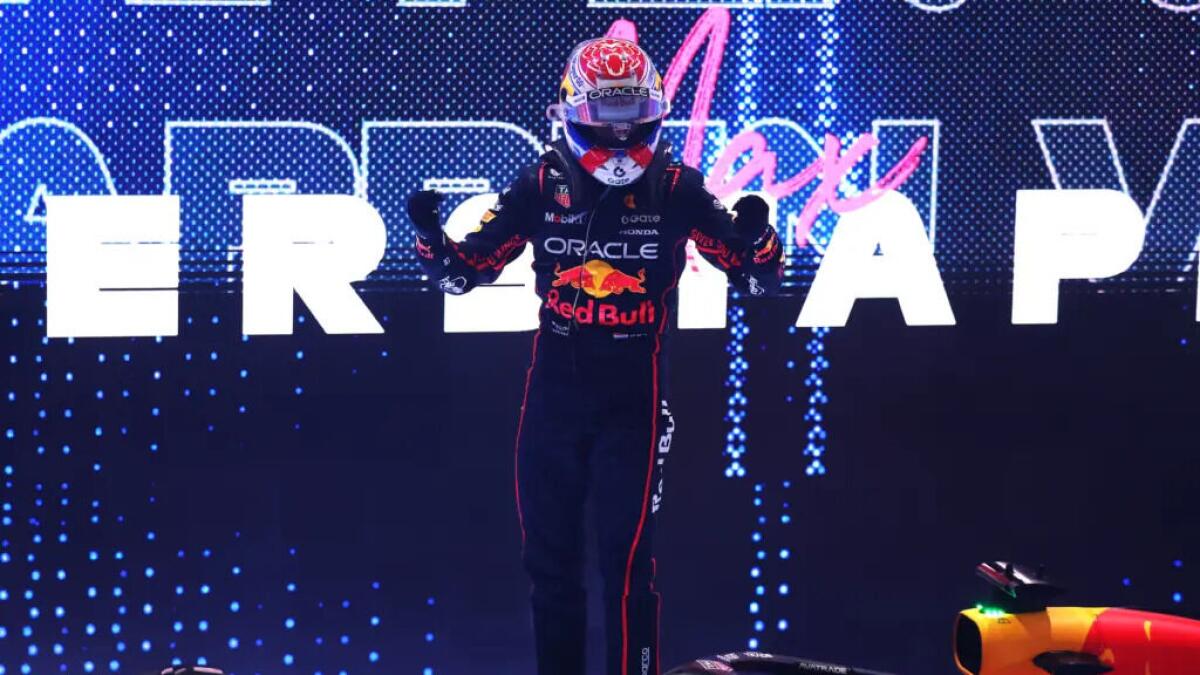
The title permutations heading into the finale
Mathematically, three drivers remained in contention when the F1 circus arrived in Abu Dhabi. Verstappen held a 15-point advantage over Norris, with Charles Leclerc a further 22 points back in third. The permutations were complex but clear: if Verstappen finished ahead of Norris, the championship was his regardless of Leclerc’s result. Norris needed to outscore Verstappen by at least 16 points to snatch the title, while Leclerc required both rivals to encounter significant trouble.
Red Bull Racing arrived with an upgraded floor package they had been saving specifically for this weekend, while McLaren brought their final major update of the season - a revised front wing and brake duct assembly designed to maximize performance in Yas Marina’s unique blend of high-speed straights and technical sections. Ferrari, despite being out of realistic title contention, brought developments for 2026 validation but remained a threat for race wins.
The championship battle had been brewing since Silverstone, where Norris claimed his first victory of the season and began his charge. Three wins in the final six races had transformed what looked like a walkover into a genuine contest, setting up the thrilling finale that had neutrals and experts alike reconsidering their preseason predictions.
Qualifying drama sets the stage
Saturday’s qualifying session delivered the perfect narrative setup. Norris secured pole position by just 0.048 seconds from Verstappen, with Leclerc slotting into third on the grid. The McLaren driver’s final lap in Q3 was described by team principal Andrea Stella as “one of the best laps I’ve ever seen in Formula 1.” The timing screen flashed purple in all three sectors as Norris extracted every millisecond from his MCL60.
Verstappen’s post-qualifying demeanor revealed the pressure he was feeling. “We gave it everything,” he told Sky Sports F1, his voice betraying unusual tension. “The car was good, but Lando just found something extra when it mattered. Tomorrow will be a long race, and we know our race pace is strong, but starting second is not ideal for the championship situation.”
The strategic considerations were immediately evident. Pole position at Yas Marina places you on the clean side of the grid, offering better launch traction - a critical advantage when the championship leader needs only to finish ahead of his rival. Red Bull’s engineers were already working late into the night, running simulations that suggested their race pace advantage was worth approximately 0.2 seconds per lap, but that might not be enough to overcome the dirty air penalty when following another car.
Behind the title contenders, George Russell qualified an impressive fourth for Mercedes, ahead of Oscar Piastri and Lewis Hamilton. The Mercedes drivers had quietly developed into genuine podium threats throughout the season’s second half, with Russell’s single-lap pace particularly potent on the Yas Marina layout.
The race: A tactical masterpiece unfolds
Sunday’s race began in typical Abu Dhabi fashion - a spectacular sunset painting the sky amber as 20 drivers prepared for 58 laps that would decide the championship. Norris aced the start, building a 1.2-second lead by the end of lap one. Verstappen, knowing he needed only to follow the McLaren home, seemed content to manage the gap in the opening stint.
The first pivotal moment came on lap 17 when Kevin Magnussen’s Haas ground to a halt at turn 9, deploying the virtual safety car. Red Bull reacted instantly, bringing Verstappen in for his first stop onto hard tires. McLaren left Norris out for two additional laps, a decision that would prove crucial. When Norris finally pitted on lap 19, he emerged 3.8 seconds behind Verstappen - the undercut had worked perfectly for Red Bull.
What followed was 20 laps of strategic chess. Norris closed to within DRS range by lap 32, his newer tires providing a grip advantage that negated Red Bull’s inherent pace superiority. The pair circulated nose-to-tail, separated by mere tenths, with Verstappen defending brilliantly through the high-speed changes of direction in sector 2. Team radio transmissions revealed the intensity:
“Max, Lando is 0.4 seconds behind, we’re matching his pace. Keep managing those tires,” came Red Bull’s reassuring call.
Norris’s engineer was more urgent: “We need this, Lando. Max is managing, he’s managing. We need to force an error or pray for a safety car.”
That safety car arrived on lap 38 when Franco Colapinto’s Williams shed its front wing after contact with the barriers at turn 13. The entire field poured into the pits for fresh medium tires for the final 20-lap sprint to the flag. Norris rejoined alongside Verstappen, the pair separated by mere feet as they exited the pit lane.
The final showdown: Verstappen vs Norris
The restart on lap 42 delivered the moment that will define this championship. Verstappen, as the leader, controlled the pace through the final corner, bunching the field before unleashing full throttle down the pit straight. Norris pulled alongside through turn 1, his McLaren running wide on the outside but carrying more speed. They ran side-by-side through turns 2 and 3, championship rivals separated by inches at 180 mph.
Verstappen’s defense was firm but fair, utilizing all the track width available to him. Norris finally secured the position into turn 6, a bold move around the outside that had the McLaren garage holding its collective breath. The pass was clean, decisive, and immediately changed the championship mathematics.
But championship number four wasn’t settled yet. Verstappen, now the hunter rather than the hunted, pushed harder than he had all race. The gap stabilized at 0.8 seconds, then 0.6, then 0.4 as they began the final lap. Through turns 17, 18, and 19 they were separated by just two-tenths of a second.
As they approached the final complex of turns, Norris locked his front wheels slightly under braking for turn 20, running wide and allowing Verstappen to draw alongside. The championship would be decided in the final three corners. Verstappen, on the inside for turn 21, forced Norris to the outside line, compromising his exit onto the long back straight.
That slight advantage was enough. Verstappen’s Red Bull pulled a few car lengths ahead as they swept through the flat-out turn 22. Norris got one final look into turn 23 but thought better of it - too much risk for a move that might have ended both their races and handed the title to Leclerc by default.
They crossed the line separated by 0.412 seconds. Norris had won the race, but Verstappen had won the war.
What the result means for Formula 1
Verstappen’s fourth consecutive championship moves him level with Sebastian Vettel and Alain Prost in the all-time standings, with only Juan Manuel Fangio, Lewis Hamilton, and Michael Schumacher ahead of him. At 27 years old, the Dutchman has firmly established himself as one of the sport’s greats, his combination of raw speed and tactical intelligence proving the complete package.
Red Bull’s team principal Christian Horner was visibly emotional in the post-race interviews. “This one meant more than the others,” he admitted, his voice cracking slightly. “When you’re eight-tenths clear in the championship with six races to go, and suddenly it’s 15 points heading to Abu Dhabi… that tests everything about your team. Max was immense under pressure.”
For McLaren and Norris, there was disappointment mixed with immense pride. The British driver had outscored Verstappen 98 points to 76 over the final six races, transforming himself from occasional race winner into genuine championship material. Team principal Andrea Stella’s assessment was telling: “We’ve closed a two-second per lap deficit to become the team that almost beat Red Bull in a championship battle. This pain today will fuel our fire for 2026.”
The technical implications are significant heading into 2026’s regulation changes. Red Bull proved they could be beaten on pure pace, while McLaren demonstrated that development rate matters as much as winter preparation. Ferrari’s late-season resurgence, which saw Leclerc win three of the final eight races, suggests they too will be major players when the new power units arrive.
The legacy of Abu Dhabi 2025
This race will be remembered as the night Formula 1 rediscovered its capacity for genuine championship drama. The sport had been crying out for a season finale where the title was decided on-track rather than in the comfort of mathematical certainty, and Abu Dhabi 2025 delivered exactly that spectacle.
For fans who witnessed the artificial excitement of 2021’s final lap controversy, this was the perfect antidote - pure racing, fair competition, and a champion who had to earn every millimeter of his victory. The debate about whether Verstappen deserved the title despite Norris winning more races in the second half of the season will rage on forums and podcasts through the winter, but that’s the nature of championship arithmetic over 24 races.
The future looks bright for Formula 1. With regulations that have clearly enabled closer competition, a new generation of drivers ready to challenge the established order, and the 2026 reset promising even more unpredictability, the Abu Dhabi 2025 finale may be remembered as the night the sport found its competitive soul again. History will show Max Verstappen as the deserving champion, but history will also note that Lando Norris pushed him harder than anyone had since 2021, setting up what should be a thrilling 2026 season.